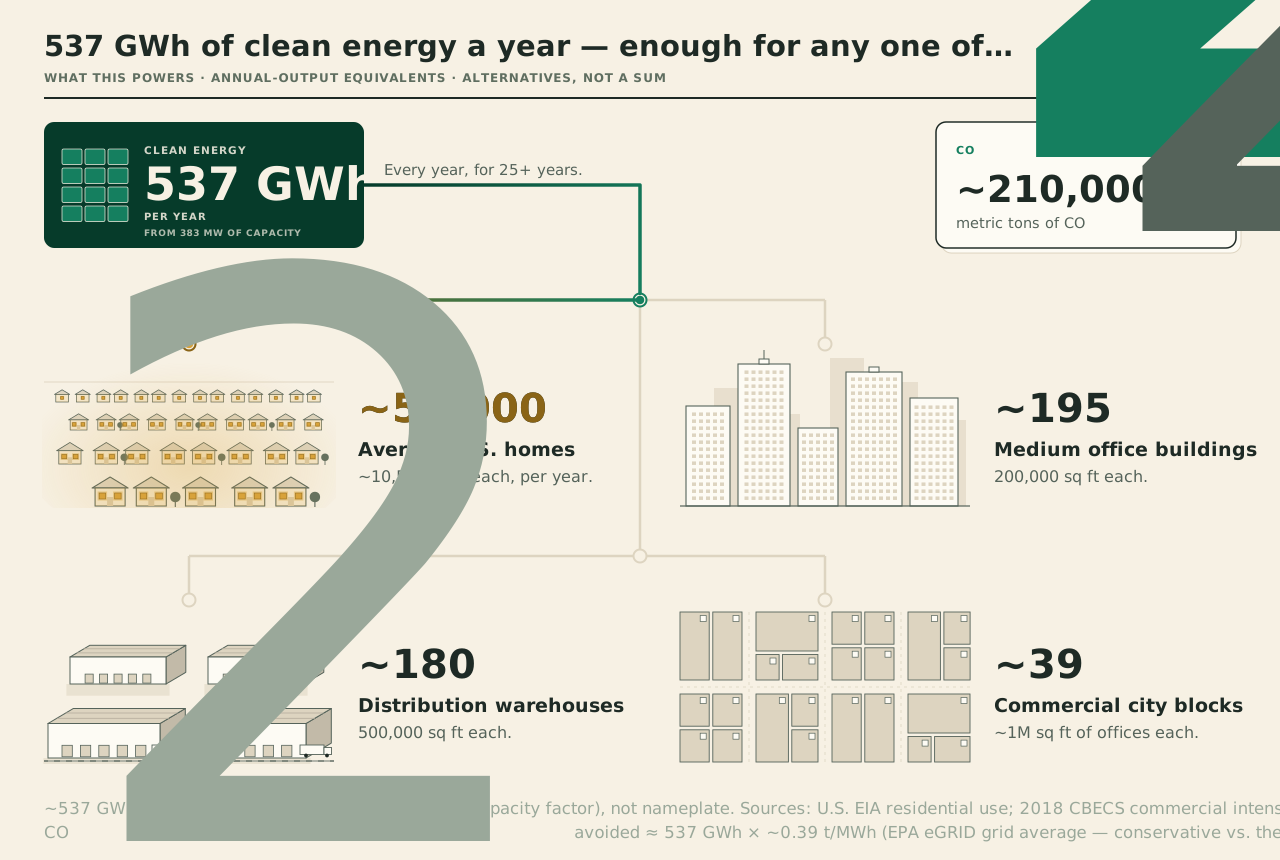
Real sites, start to finish.
The map is the aggregate. Up close, here are projects our team originated: the land, the grid, the permit and the community benefit, on sites you can see from space. Use the arrows to flip through.
 Imagery © Esri
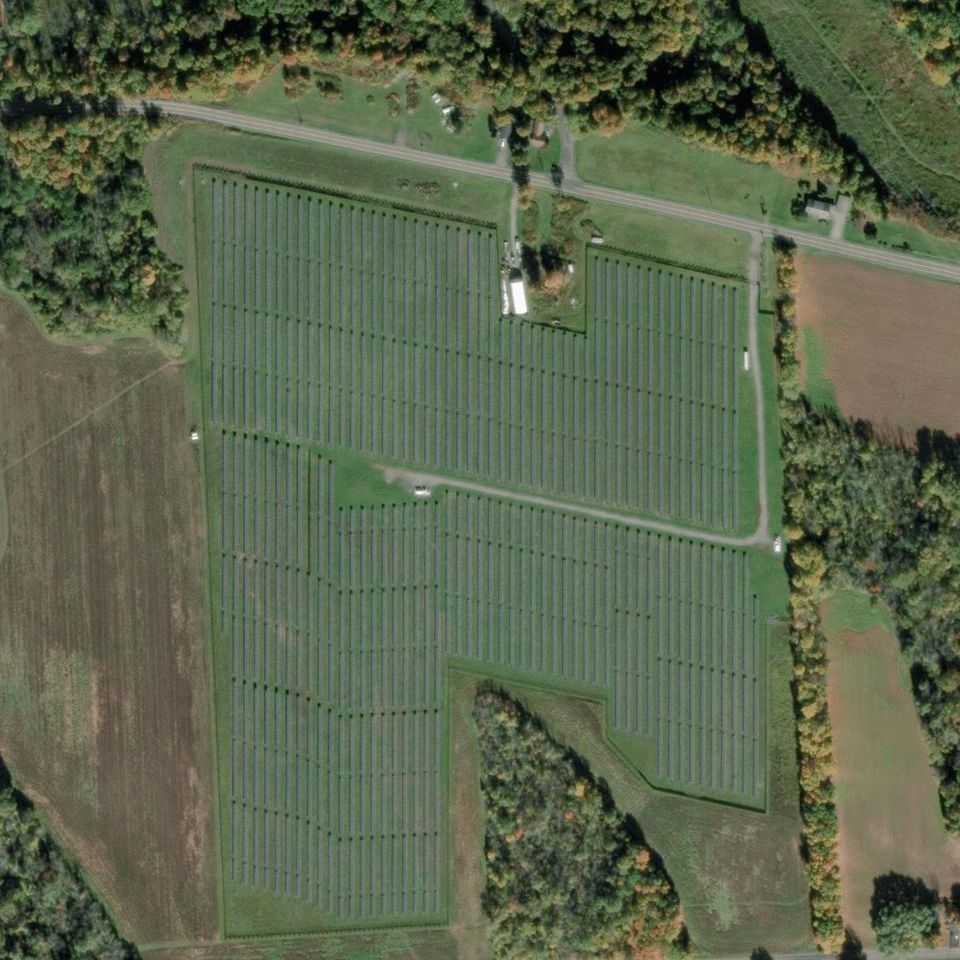
~56 acres leased · Agricultural land. Low-profile and reversible at end of term.
Interconnected on National Grid’s Sorrell Hill feeder, a distribution circuit with the headroom to take the full 5 MW without a costly network upgrade.
Agricultural (A) district. Planning Board site-plan review under the town’s solar law, well below New York’s 25 MW state-siting threshold, so it was permitted locally.
~670 homes of clean power a year to local subscribers. On the 2025 roll at about $1.28M of new assessed value, taxable value added for the town and Baldwinsville schools, on leased farmland the owner keeps.
 Imagery © Esri
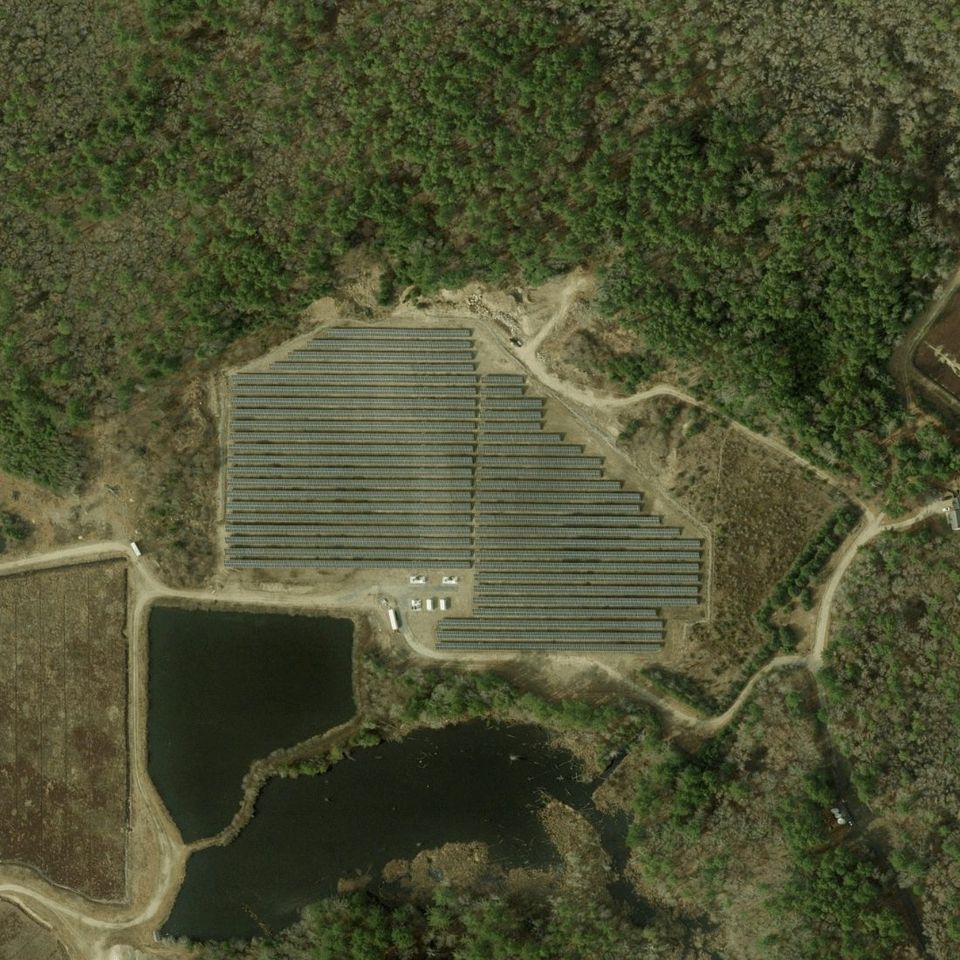
~16-acre array on a 203-acre parcel · A former sand pit above cranberry bogs, not farmland. Low-profile and reversible at end of term.
Built with a 2.3 MW / 5.4 MWh battery under Massachusetts’ SMART program, solar paired with storage that can feed the grid after the sun goes down.
Residential (R1) district. Special-use permit and site-plan review by the Town of Plympton, under Massachusetts’ solar-siting protections.
~670 homes of clean power a year to local subscribers. Sited on a former sand pit, so no farmland was lost; the battery lets the project deliver clean power into the evening peak.
 Imagery © Esri
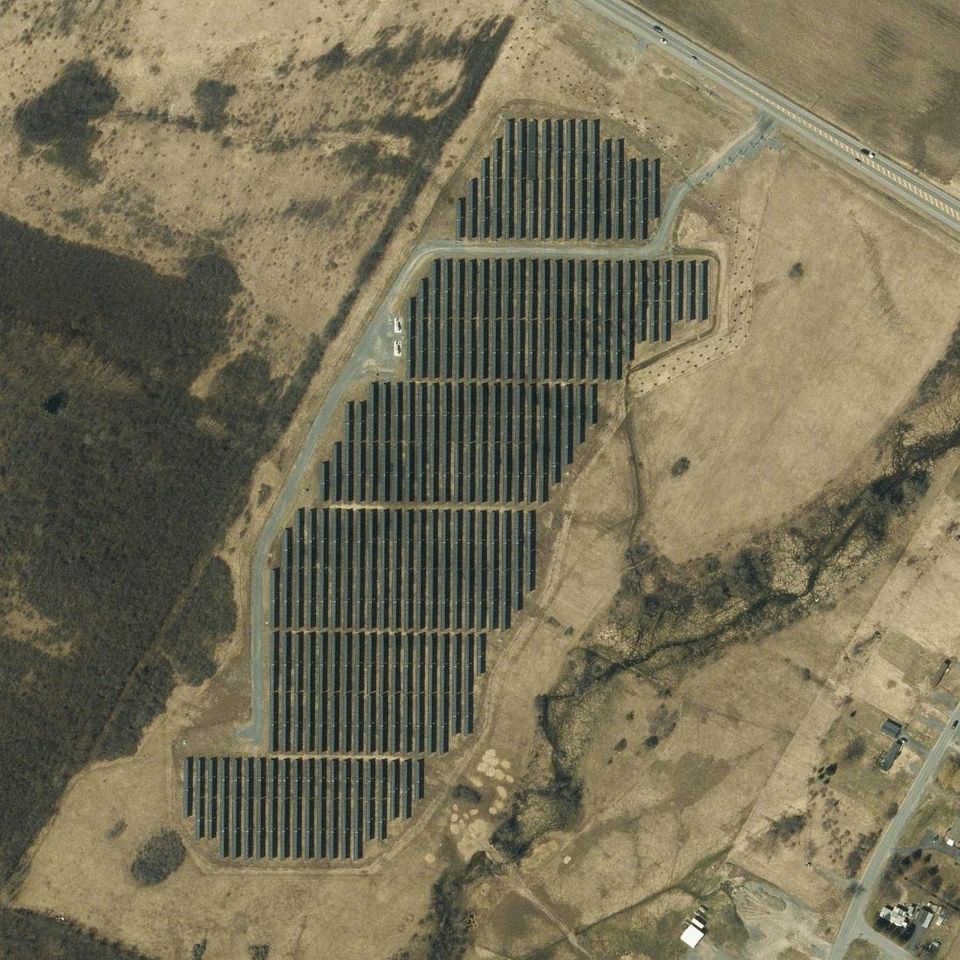
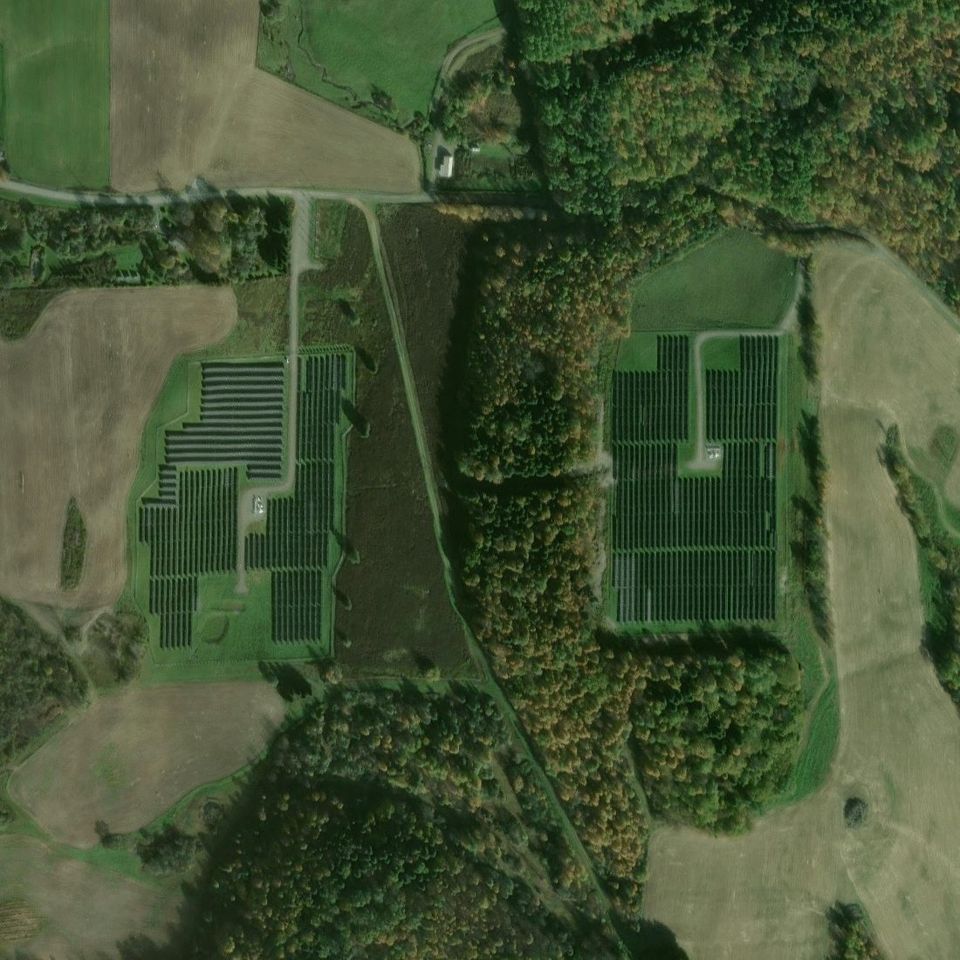
~22-acre array · Agricultural / rural land. Low-profile and reversible at end of term.
Sited on National Grid’s Indian River feeder off NY-342, a short, clean interconnection on a circuit screened for hosting capacity before site control.
Agricultural-Residential (AR) district. Reviewed and approved by the Town under its zoning law; below the 25 MW state-siting threshold, so no state siting board was required.
~670 homes of clean power a year to local subscribers. Pays roughly $36,000 a year under a PILOT agreement to Jefferson County and the Indian River schools, running through 2037.
 Imagery © Esri
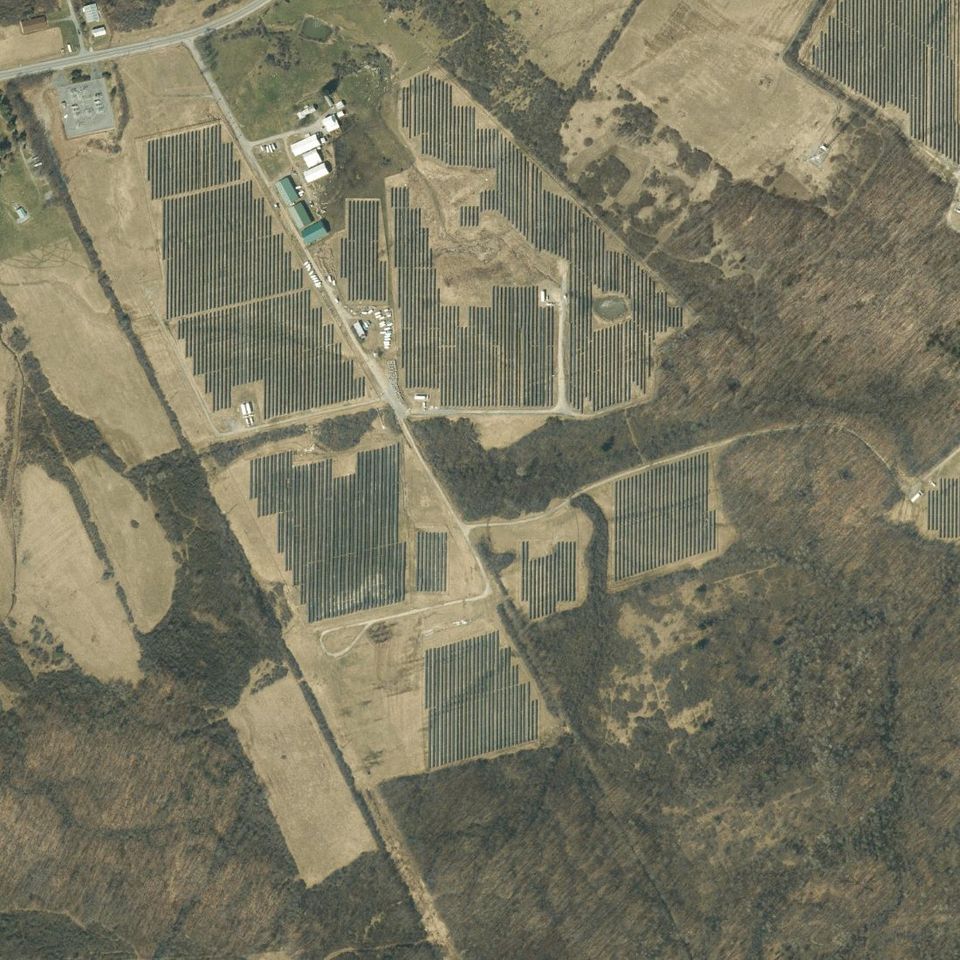
~76-acre parcel · Agricultural land. Low-profile and reversible at end of term.
Interconnected on National Grid’s Delphi feeder near New Woodstock, the only utility-scale project on the substation, screened for capacity before site control.
Rural (RB) district. Special-use permit and site-plan approval from the Town, commercial solar is allowed in the rural districts under the town solar law, below New York’s 25 MW state-siting threshold.
~640 homes of clean power a year to local subscribers. Feeds community-solar subscribers across Madison County while the host farm keeps title to the land throughout the lease.
 Imagery © Esri
~100 acres across four arrays · Farmland off NYS Route 12. Low-profile and reversible at end of term.
Four co-located 5 MW arrays our team originated on National Grid’s Thousand Islands substation, each now paired with a 5 MW battery, so the solar can shift power to when the grid needs it most.
Agricultural-Rural Residence (AR). Each phase permitted locally by special-use permit and site-plan review, four community-solar projects, each below New York’s 25 MW state-siting threshold.
~2,700 homes of clean power a year to local subscribers. Together the four pay roughly $136,000 a year in PILOT payments to Jefferson County and the local schools, through 2035.
 Imagery © Esri
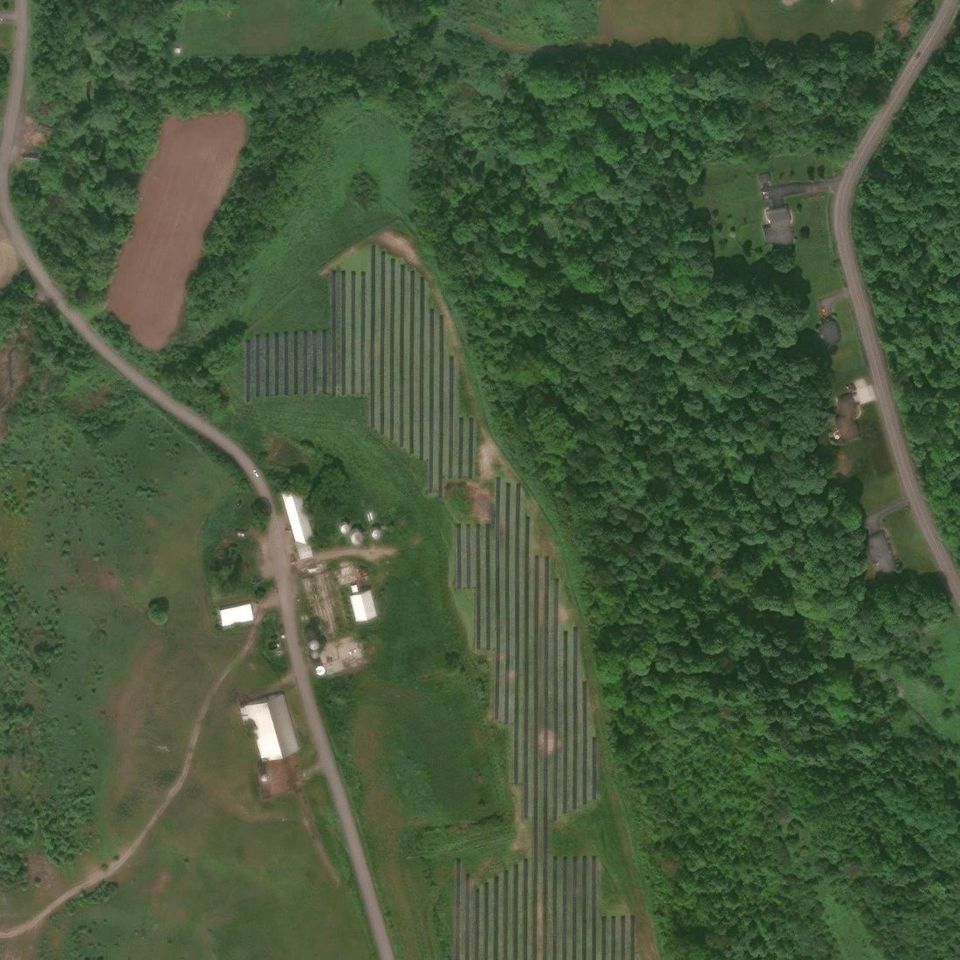
~30-acre parcel · Family farmland (one of two paired projects). Low-profile and reversible at end of term.
The northern of two neighboring 5 MW projects Verde sited together on National Grid’s Milton Avenue feeder in Camillus.
Rural Residential (R-R) district. Special-use permit and Planning Board site-plan approval, with a PILOT and a host-community agreement, a local approval below the 25 MW state-siting threshold.
~670 homes of clean power a year to local subscribers. Pays about $27,500 a year under a PILOT to Onondaga County, the Town of Camillus and West Genesee schools, through 2048.
 Imagery © Esri
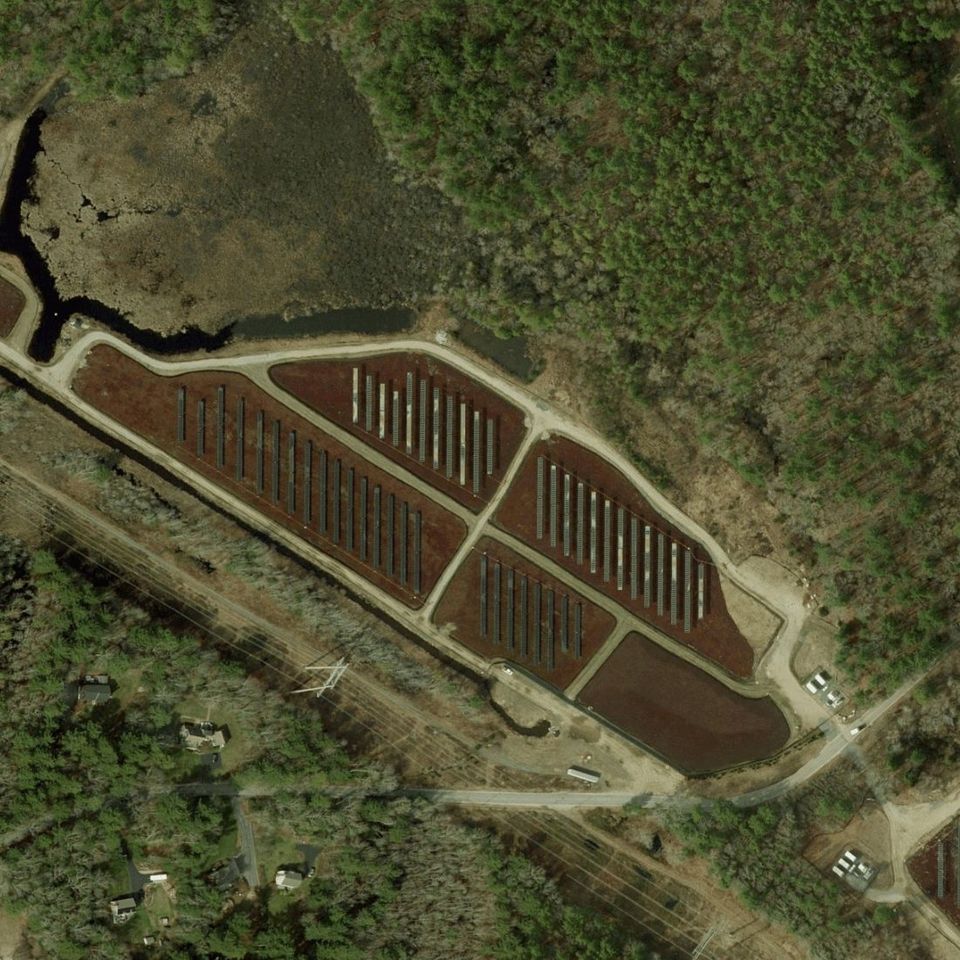
built on retired cranberry bogs · Retired cranberry bogs. Low-profile and reversible at end of term.
Pairs 2 MW of solar with an unusually large 2 MW / 13.5 MWh battery, nearly seven hours of storage, under Massachusetts’ SMART program, built to shift power deep into the evening peak.
Residential (R1) district. Local special-use permit and site-plan review, with the interconnection equipment in neighboring Kingston.
~270 homes of clean power a year to local subscribers. Reuses retired cranberry bogs rather than open land; the big battery means it can deliver stored solar when the regional grid peaks.
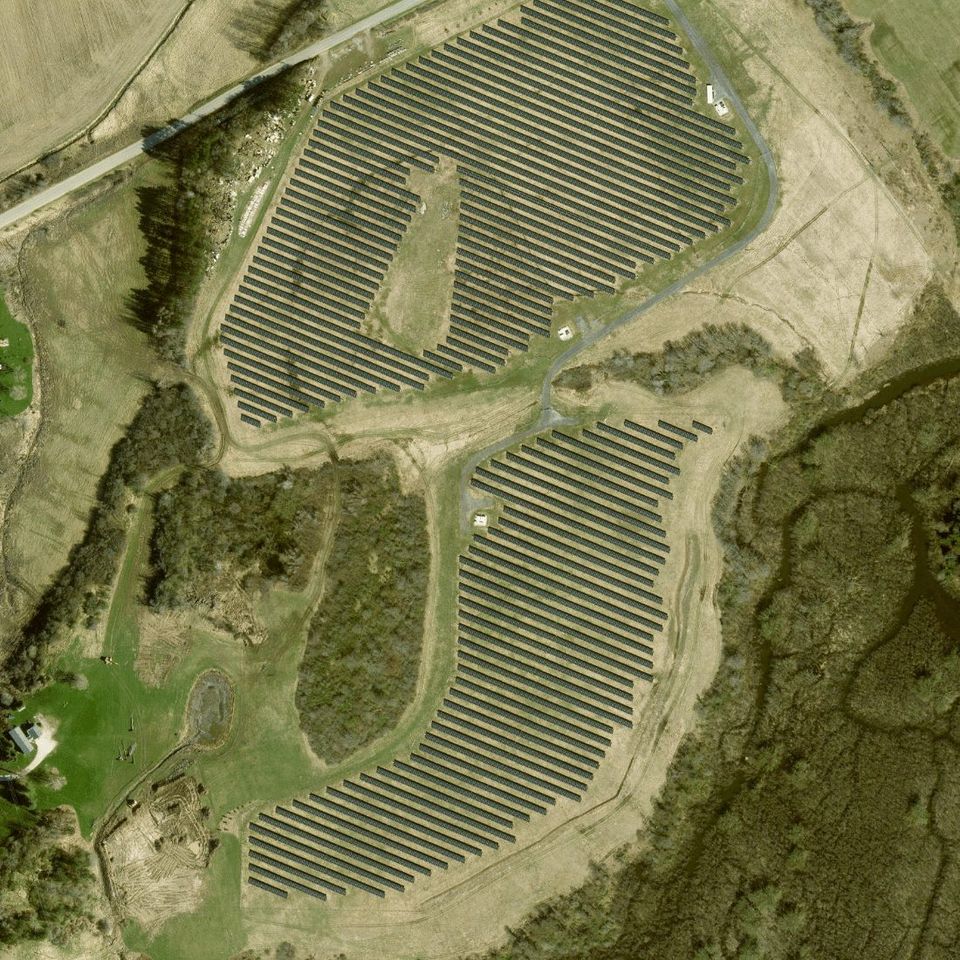 Imagery © Esri
~33-acre array · Rural land. Low-profile and reversible at end of term.
Interconnected beside National Grid’s De Kalb substation, co-located arrays sharing one strong point of grid access that Verde identified up front.
No local zoning. With no zoning code in De Kalb, the project cleared the Town’s site-plan review after a public hearing, a fully local approval.
~670 homes of clean power a year to local subscribers. Pays about $34,000 a year in PILOT payments split among St. Lawrence County, the Town of De Kalb and the Hermon-De Kalb schools, through 2043.
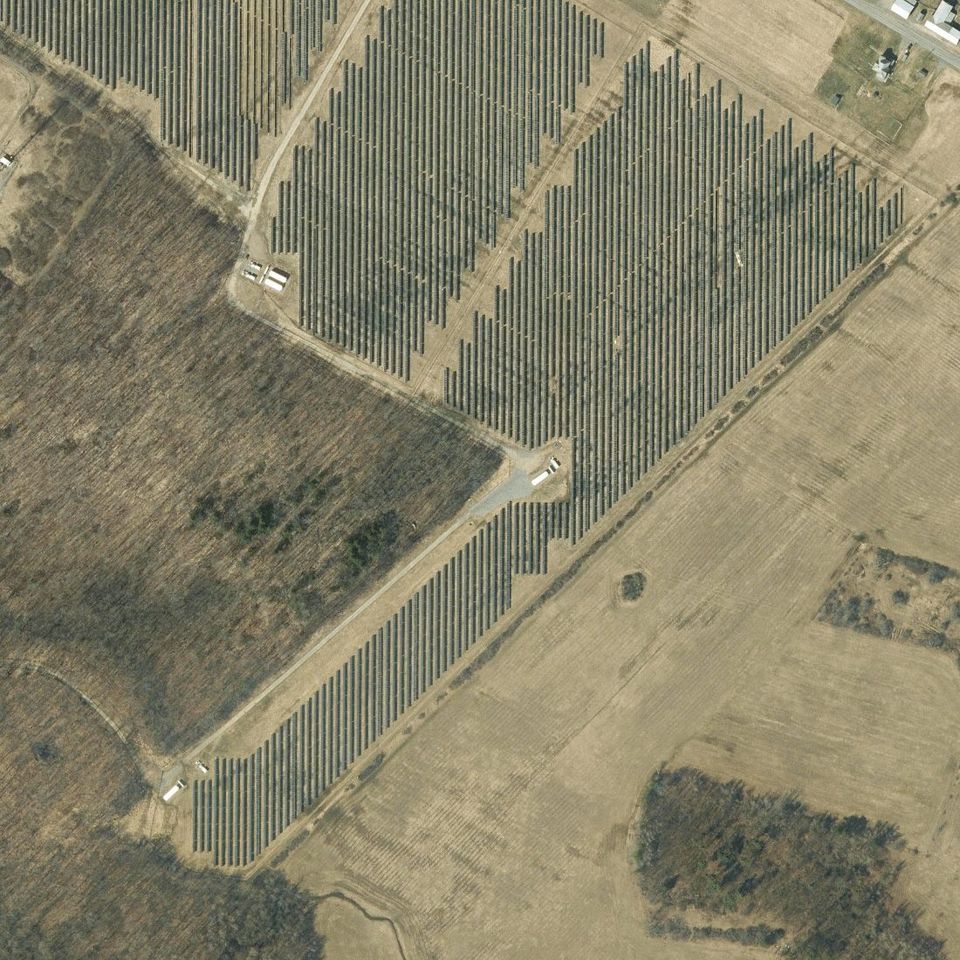 Imagery © Esri
~51-acre array · Farmland. Low-profile and reversible at end of term.
On National Grid’s Thousand Islands feeder near Clayton, one of several projects our origination placed on this North Country substation.
Agriculture & Rural Residence (AR) district. Special-use permit and site-plan review by the Town of Orleans Planning Board under its solar law, a fully local approval below the state-siting threshold.
~670 homes of clean power a year to local subscribers. Pays roughly $33,000 a year under a PILOT agreement to Jefferson County and the Thousand Islands schools, running through 2037.
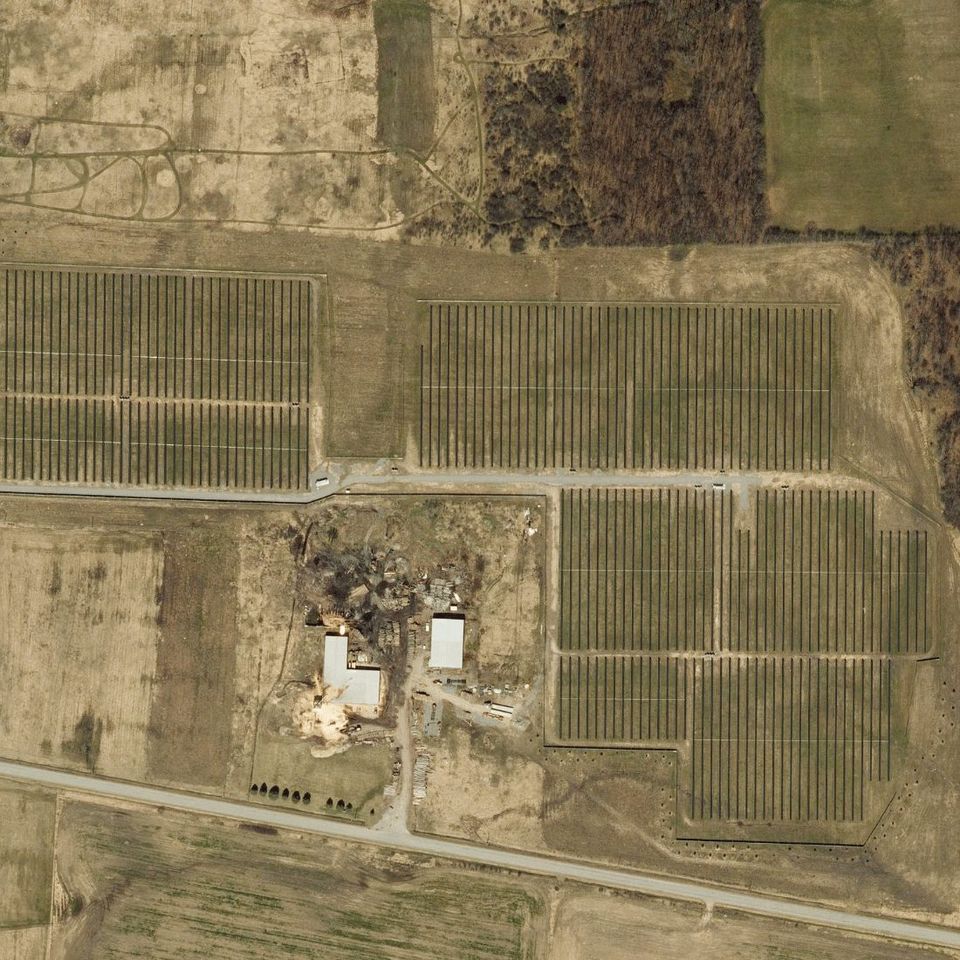 Imagery © Esri
part of an 88-acre parcel · Beside a working lumber yard, no prime farmland taken. Low-profile and reversible at end of term.
On National Grid’s York Center feeder in the Genesee Valley, a distribution interconnection screened for capacity before the lease was signed.
Planned-Development / Agricultural area. Special-use permit and site-plan approval from the Town of York Planning Board, with a decommissioning agreement, a local approval below the state-siting threshold.
~670 homes of clean power a year to local subscribers. Shares a parcel with an active lumber yard, so the land stays in productive use while the lease adds steady income and new local tax value.
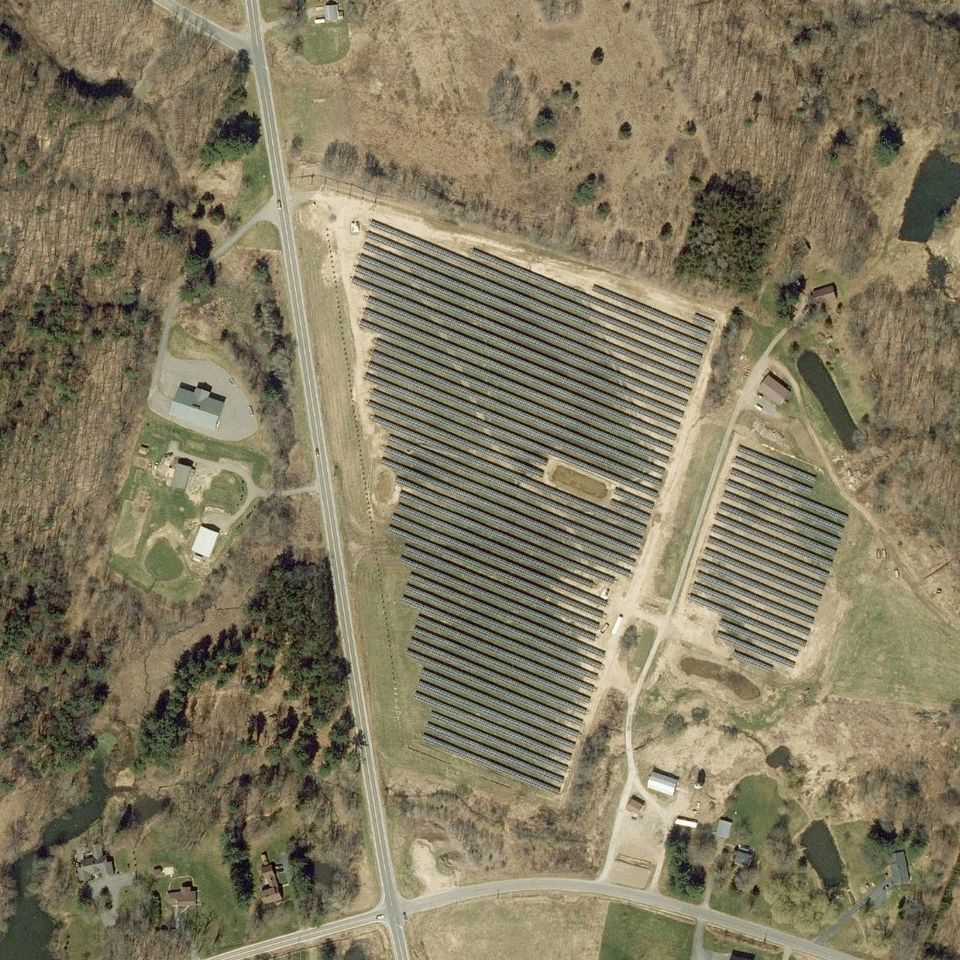 Imagery © Esri
~21-acre array · Rural land. Low-profile and reversible at end of term.
Interconnected on National Grid’s Whitaker feeder near Fulton, a distribution circuit with capacity confirmed before Verde took site control.
Agricultural district. Special-use permit and site-plan review from the Town of Volney Planning Board under the town’s solar law, a local approval, below the 25 MW state-siting threshold.
~670 homes of clean power a year to local subscribers. Pays roughly $18,000 a year under a PILOT agreement to Oswego County, the Town of Volney and the Fulton schools, running through 2042.
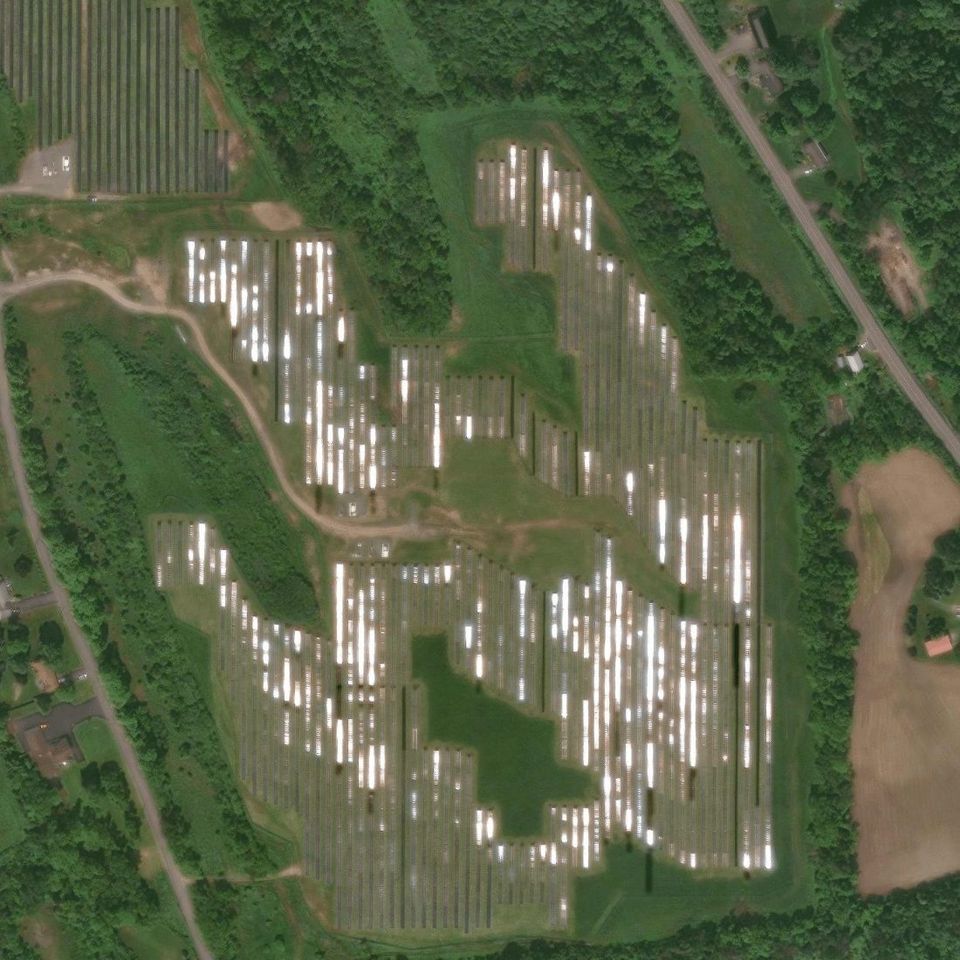 Imagery © Esri
~39-acre parcel · Same family farm as its sister project nearby. Low-profile and reversible at end of term.
The southern half of the paired Milton Avenue projects, two co-located 5 MW interconnections on one stretch of National Grid feeder.
Residential (R-1) district. Permitted alongside its sister project by special-use permit and site-plan approval, each carrying a PILOT and host-community agreement.
~670 homes of clean power a year to local subscribers. Adds another ~$27,500 a year in PILOT payments, about $55,000 a year combined with the North project to the county, town and West Genesee schools.
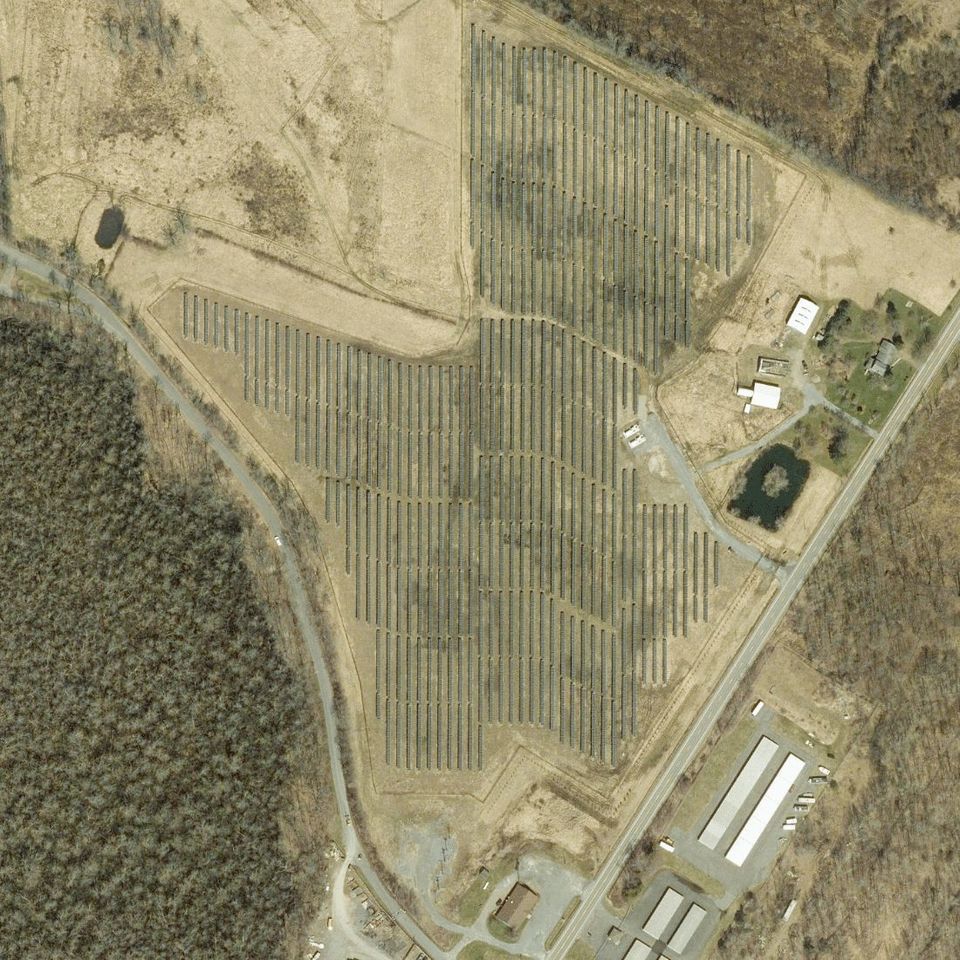 Imagery © Esri
~25-acre parcel · Rural land along NY-3. Low-profile and reversible at end of term.
Interconnected on National Grid’s East Pulaski feeder on Route 3 north of Pulaski, the one 5 MW community project on the circuit.
Residential-Agricultural (RA) district. Site-plan review and special permit from the Town of Richland Planning Board under its solar law, a local approval below the state-siting threshold.
~670 homes of clean power a year to local subscribers. Pays about $17,850 a year under a PILOT agreement to Oswego County, the Town of Richland and the Pulaski schools, through 2037.