Still have questions?
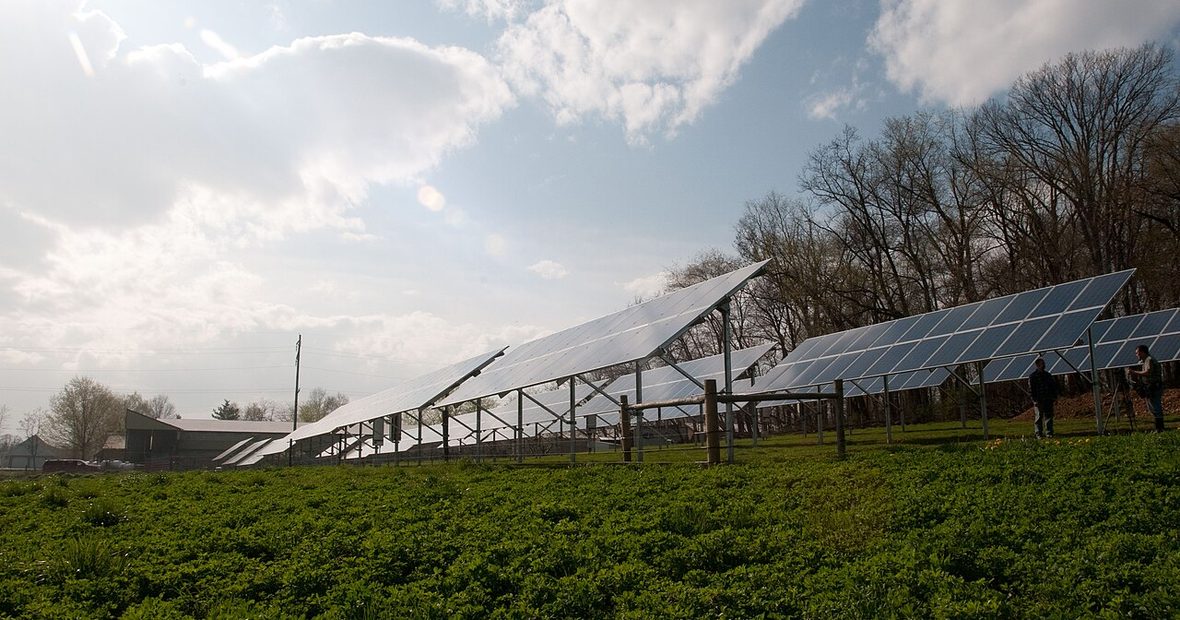
Community solar is a mid-size solar array that sends power to the local grid, so nearby homes and businesses can subscribe to it. Battery storage charges from the grid when power is plentiful and releases it when demand is high, which helps keep the local grid steady. Both are quiet, low to the ground, and use only part of a property. You lease the land; we design, build, own and operate the project.
What is a battery storage system?
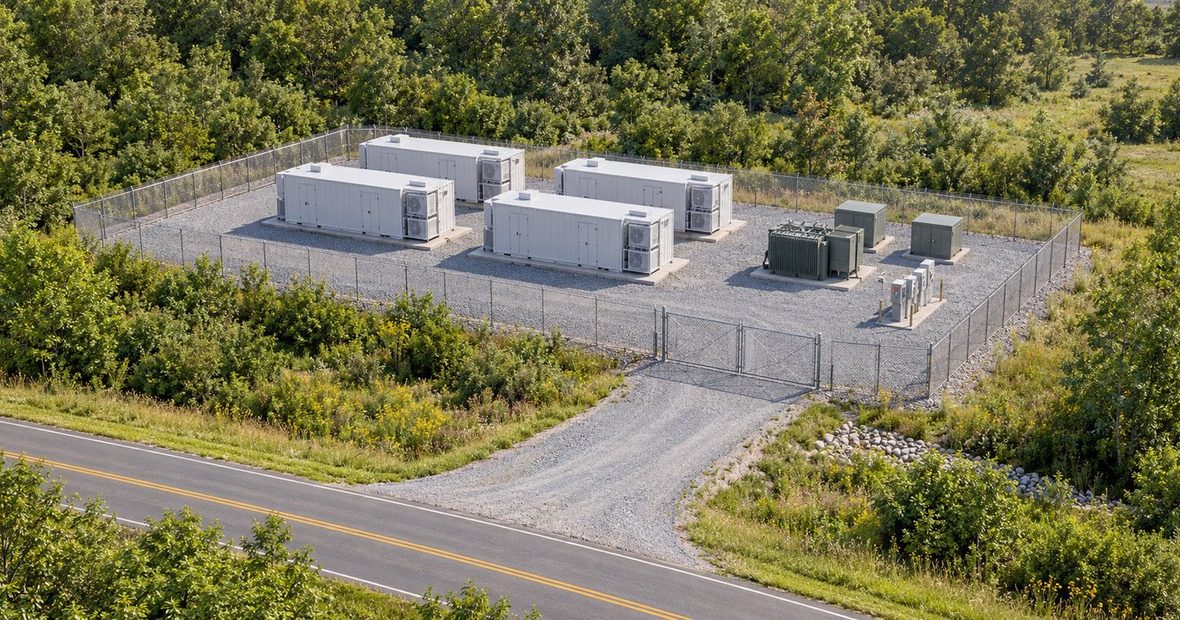
A battery storage system, often called a BESS, is a set of large lithium batteries housed in steel enclosures roughly the size of shipping containers. It charges from the grid when power is plentiful and inexpensive, then sends that power back when demand is high, which helps keep the local network stable and eases the strain during peak hours. There is no fuel, no combustion, no smokestack, and nothing is burned on site. The units are sealed and monitored around the clock, and the only real sound is the cooling fans.
How big is a project, and how will it look?
A battery project is small by industry standards. The equipment itself sits on well under an acre, and once you add perimeter fencing, an access drive, and the setbacks the town requires, the leased area is usually one to three acres. The enclosures stand about ten feet tall, so the project sits low on the landscape and is easily screened with fencing or landscaping. Community solar needs more room, often fifteen to forty acres, but the panels are low to the ground and the land around and beneath them can frequently still be grazed or planted.
What does the option period mean?
The option gives us the right, but not the obligation, to lease your site while we find out whether a project is actually feasible there. During this time we run the grid-connection analysis, begin permitting, and complete environmental and survey work, all at our own cost. You keep using your property exactly as you do today, and you are paid for each year the option is in place. If the studies show a project will not work, the option simply ends, and everything you were paid stays yours.
Can I keep using my land during the option?
Yes. Throughout the option period you can keep farming, grazing, hunting, or using the property however you do now. From time to time we will need reasonable access for site visits, surveys, and studies, and we always arrange that with you ahead of time. Nothing is built and nothing changes on your land until a lease is signed and the project actually moves forward.
What happens once the lease starts?
When the lease begins, we build the project within the leased, fenced area, and you receive annual rent for the full length of the lease. The rest of your property remains entirely yours to use as you always have. We own, operate, and maintain the equipment, so there is nothing for you to manage, and the rent arrives on a set schedule, year after year, for decades.
Is it safe? Is it noisy?
Modern systems are engineered to national fire and electrical codes and to New York State's requirements, with continuous monitoring, active cooling, and built-in fire detection and suppression. The only real sound is the cooling fans, a low hum that is usually hard to hear beyond the fence line, and there are no emissions or odors. Local fire departments are consulted during permitting and are given an emergency response plan for the site, so first responders know exactly what is there and how it works.
Who handles permits, construction and maintenance?
We do, entirely at our own cost. From permitting and interconnection through construction, operation, and routine upkeep, the project is ours to manage from start to finish. It runs unmanned and is monitored remotely, with technicians visiting periodically for scheduled maintenance. You are never asked to arrange, oversee, or pay for any part of it.
What about property taxes?
Any increase in property tax that results specifically from our equipment is addressed directly in the agreement, so you are never left carrying the cost of the project's improvements. In many cases the host community also sets up a PILOT (payment in lieu of taxes) arrangement with the project, which is negotiated separately with the town or county. We walk you through exactly how taxes will be handled before you sign anything.
What happens at the end of the lease?
At the end of the term we remove all of the equipment and restore the land to the condition it was in before the project. These decommissioning obligations are written into the lease itself, and they are typically backed by a financial security, such as a bond, that the town or county requires us to post up front. That means the cost of removing the project is set aside in advance and never becomes your responsibility.
Is the project guaranteed to be built?
No, and we will always be straight with you about that. Every project depends on grid capacity, permitting, and market conditions, and some sites simply do not move forward. That is exactly why the option pays you along the way: whatever you receive during the option period is yours to keep, whether or not the project is ever built. You take on none of the development risk.
Will this affect my mortgage?
If there is a mortgage on the property, your lender may need to sign a short, standard agreement that acknowledges the lease and protects both you and the project. This is a routine step, and we handle the paperwork directly with you and your lender. It does not change the terms of your existing mortgage.
What are the next steps?
We talk it through, answer every question you have, and put the terms in writing so you can review them at your own pace. You are always welcome to have your own attorney or advisor look everything over before you decide. Once the option is signed, our studies begin, and from there we keep you informed at every stage, all the way through to an operating project.